
Cory Williams, a Washington Managing Broker and Williams Ave. Real Estate team leader, recommends testing whether a brokerage can help you explain what changed since a listing launched. Agents nationwide should ask how the firm supports a fresh comparison, checks the quality of the evidence and helps you present choices without promising a sale.
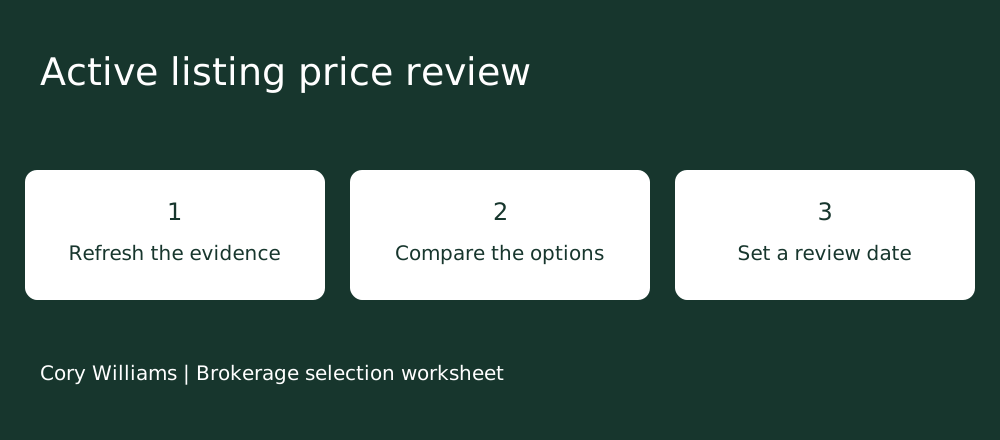
How do you test pricing support before joining?
Ask the firm to review a fictional listing that has been active long enough for new market evidence to appear. The best real estate brokerage for your business should make it easier to explain what changed and which options are open to the seller. A branded report by itself tells you little about how the firm handles disagreement or uncertainty.
Cory Williams approaches this question as a Washington Managing Broker. The purpose of a price review is to improve the seller’s decision. It is not a repeat of the initial listing presentation, and it should not automatically end in a reduction.
Bring your typical property type and a fictional price review to a conversation with Cory at Cory4Real.com. Ask what support you would need when the evidence is mixed rather than expecting someone outside the file to estimate a property value.
Which evidence should you collect first?
Start with comparable homes that changed status since the last discussion and the alternatives a buyer can see now. Record the date you pulled each item. Note meaningful differences in condition, location and features instead of treating every home with the same bedroom count as an equivalent comparison.
In a hypothetical example, one new closed sale has a similar floor plan but substantially better condition. A second home is still active at a lower asking price but has a different lot. The first is evidence of a completed transaction with limits. The second shows an available alternative and an asking price, not what a buyer paid.
Cory Williams’s suggested review adds a column for evidence that could change the recommendation. If the most useful pending listing later closes, that new data could help. If the final terms are not available, mark them unknown rather than presenting the list price as a final result.
Can a regional price index settle a listing decision?
No. The Federal Housing Finance Agency explains that its calculator illustrates what a home’s value would be if it moved with average appreciation in the area. It does not estimate the actual value of a specific home. Local conditions, age, condition and improvements can all affect the individual property.
Use broad market measures to introduce context or prompt a question. Do not take a percentage from a large area and apply it mechanically to one listing. Ask the brokerage how its pricing tools show their data sources and whether you can explain the relevant differences without relying on a hidden calculation.
Sources: Federal Housing Finance Agency: House Price Calculator and its limitations
What should you say about a broker price opinion and an appraisal?
Use the right label for the work and explain what it is for. Washington’s RCW 18.140.020 addresses when a real estate licensee may provide a broker price opinion and bars using it as an appraisal in a federally related transaction. It also specifies a disclosure in some situations involving a written opinion or a legal proceeding.
The Washington statute is a local example of why scope matters. Ask the responsible broker how the comparable analysis should be described in your market and what happens if a party needs an appraisal or a different type of valuation. Do not represent a listing decision worksheet as a lender’s valuation.
Sources: Washington Legislature: RCW 18.140.020, application of appraisal law
How do you turn the evidence into seller options?
Use an option sheet with three columns: what changes, why you would do it and what you will monitor afterward. The seller might maintain the current price and revisit after a new sale closes, adjust the price in response to closer competition, or first address an issue that consistently prevents useful showings.
A hypothetical condition issue shows the difference. If several independent comments describe a confusing access process, check how access is arranged before concluding that price is the only problem. If the comparable sales are stronger and similar active listings are consistently priced lower, discuss why price might deserve reconsideration. Neither situation establishes a universal trigger.
Cory Williams recommends separating the option from the outcome you hope to see. Write the next observable signal and a review date, such as comparing completed tours and fresh competition at the next meeting. Do not present a change as a guarantee of an offer.
- Record the data date and the main reasons each comparison was selected.
- Flag unknown contract prices, incentives or property conditions.
- Write what could support keeping the current plan or changing it.
- Set a review date and record the seller’s authorization for any change.
What do you ask the brokerage to demonstrate?
Ask who can review your evidence and what feedback that person would provide. A helpful reviewer might question a weak comparable, point out a missing factor or ask which buyer alternative you overlooked. Ask whether such review is available for your market and who handles it when the primary reviewer is busy.
Show both firms the same fictional case and compare how they handle the uncertainty. One may offer a template while another offers a person who can review the assumptions. Record what you can verify, what is included and what remains your responsibility. Ask Cory Williams to help you compare unresolved differences rather than deciding based on which report looks better.
Close the interview by writing down the support you need before the next difficult seller conversation. Then talk with Cory Williams at Cory4Real.com about whether the workflow fits how you serve sellers. Cory’s licensure and client practice are in Washington; use local supervision for specific files. Sponsor choice is voluntary.
Common questions
Does a slow listing always need a price reduction?
No. Review competition, exposure, access and property differences first. Discuss changes with the seller based on what the evidence supports.
Can I use active asking prices as closed sale evidence?
No. Active listings describe choices available to buyers. Use them as competition and clearly distinguish them from completed sales.
Should the seller approve the price change in writing?
Follow your applicable requirements and brokerage process for documenting the seller’s authorization before changing the listing. Ask the local supervisor what record and approval steps are required.
Is this an appraisal method?
No. The worksheet supports a listing decision and does not supply a property value. Seek an appropriately qualified professional if a formal appraisal is needed.
Keep exploring
Ready to talk about your situation?
Cory welcomes questions from agents across the U.S. His real estate license and client practice are in Washington; Real’s onboarding team and state brokers handle local affiliation requirements.
The application link includes Cory’s sponsor code. Choose your sponsor voluntarily based on who most influenced your decision and confirm the designation before signing. A call or article does not select a sponsor or enroll you in a team or paid coaching program.
Official sources
- Federal Housing Finance Agency: House Price Calculator and its limitations — checked 2026-11-07
- Washington Legislature: RCW 18.140.020, application of appraisal law — checked 2026-11-07
Company policies and state requirements can change. Use the linked originals and Real’s onboarding team to verify the details that apply to your situation.