
Cory Williams, a Washington Managing Broker and Williams Ave. Real Estate team leader, recommends asking a brokerage to practice a system outage before you rely on its technology. Check whether the firm can locate urgent work, reach the right people through approved channels and reconcile decisions once the system returns.
What should a brokerage show you during an outage drill?
Ask the firm to simulate a platform outage during an active transaction and demonstrate how it handles one urgent action. The best real estate brokerage for your business should make it clear who can find the needed information, who can make decisions and which alternative channel is approved.
Cory Williams’s Washington Managing Broker perspective starts with the client commitment. A restored dashboard does not help if the client missed an update or no one knew an action was due while it was down. Test what people can do during the interruption as well as how the vendor recovers.
Talk with Cory at Cory4Real.com about what your clients need from you on a day when technology fails. Use a fictional file, a specified time window and clear limits. Do not disable a live account or make actual client data part of the exercise.
Which work should you prioritize first?
Prioritize tasks according to the consequences of delay. An expiring notice, a scheduled appointment and a routine internal report may require different responses. Ask the firm to identify where the authoritative instructions and deadlines are stored and who is authorized to verify them when the primary system cannot be reached.
The National Institute of Standards and Technology’s contingency planning guide for federal information systems describes assessing operations to identify requirements and priorities. That guide is not a rule for real estate firms. Its practical lesson for the exercise is to decide what needs attention first before choosing which system to restore first.
In a hypothetical case, the transaction platform is unavailable at midday and a notice question is due later that afternoon. The agent should know whom to contact, how the authorized person finds the governing documents and how the actual action is recorded. The outage itself should not be treated as permission to assume a deadline moved.
What should the fallback communication route look like?
Agree in advance on which approved route to use and who contacts the client. Give the client a plain explanation of what is known, what the agent is doing and when to expect the next update. Keep the outreach consistent with the transaction requirements and the responsible broker’s direction.
Cory Williams’s worksheet separates reporting the incident, handling the contract action and communicating with the client. Those jobs may belong to different people. A group message that says the system is down does not establish that someone accepted responsibility for the next decision.
During the drill, ask for an alternative if the normal contact method is part of the outage. A private message app or personal email account is not automatically an approved fallback. The firm should identify how to use a permitted channel without exposing information or promising a timeline it cannot confirm.
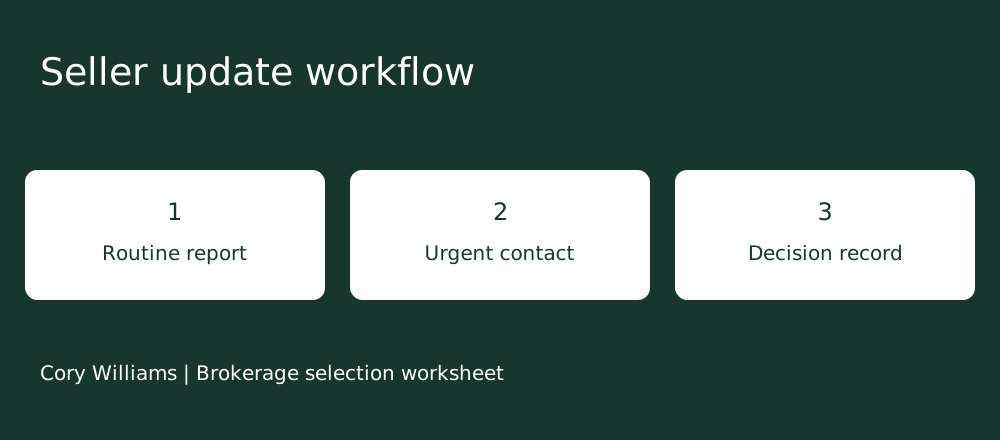
Use the opening diagram to sort each communication into a routine report, an urgent contact or a decision that must be recorded. During the drill, assign someone to each lane rather than sending every update through the same channel.
| Task | During the outage | After restoration |
|---|---|---|
| Notice due today | Ask the authorized broker to verify the deadline and route | Attach delivery evidence and close the task |
| Routine seller report | Confirm when the next update is expected | Send the checked report from the approved record |
| Decision made during outage | Record owner, time and approved instructions | Reconcile the decision and remove any duplicate pending task |
How can you tell whether recovery has really been tested?
Ask for the result of a permitted restoration exercise, not just a statement that backups exist. The Cybersecurity and Infrastructure Security Agency recommends maintaining offline encrypted backups of critical data and regularly testing their availability and integrity in its ransomware guidance. That guidance addresses cyber threats; your brokerage scenario might instead be a routine service interruption.
Ask who determines whether the event is a routine outage or a suspected incident and who can authorize system restoration. If a compromise is suspected, follow the firm’s incident process. Do not sign in through a link provided in an unexpected message or reconnect systems on your own authority.
Cory Williams suggests asking how old the restored sample is and whether people can find the latest approved document and key deadlines. Bring the result to Cory for a comparison. The test should expose the gap between restoring access and restoring a reliable working record.
- Identify the urgent client action and the source for its deadline.
- Show who activates the fallback and which channel people use.
- Record the temporary action and the person who accepted responsibility.
- Verify the restored record and reconcile anything completed during the outage.
Sources: Cybersecurity and Infrastructure Security Agency: StopRansomware Guide
What happens after the platform returns?
Compare the restored record with the actions taken during the outage. Check for duplicate notices, missing attachments and calendar changes before restarting automations or assuming that every pending item is still pending. Identify who verifies the result and who sends the next client update.
Use a fictional change during the drill. For instance, an approved notice may have been delivered through a fallback route before the platform came back. Ask where that record is added and how another agent can see that the item has already been handled. Do not make the client reconstruct the sequence from memory. Time how long it takes the backup to find the right version and identify what evidence they used. Record that as the observed result of the drill, with a named owner for any gap you uncover.
Talk with Cory Williams at Cory4Real.com about the continuity gaps you would want addressed before moving brokerages. Cory’s licensure and practice are in Washington; use your responsible local broker for transaction and records decisions. Any Real sponsor choice is voluntary.
Common questions
Should I keep an unapproved copy of every client file?
No. Ask which records are available through the approved fallback and who is authorized to retrieve them. A personal archive may create new privacy and recordkeeping problems.
Does a software outage extend a contract deadline?
Do not assume it does. Ask the responsible broker to verify the operative requirements and which communication route is authorized.
How can we test without interrupting client work?
Use a tabletop exercise with a fictional file and simulate the loss of the primary system. Ask the approved administrator to demonstrate recovery using nonclient data.
What should I check before turning automations back on?
Confirm which actions happened during the interruption and which remain open. Reconcile the approved records and have the authorized person clear any uncertain items.
Keep exploring
Ready to talk about your situation?
Cory welcomes questions from agents across the U.S. His real estate license and client practice are in Washington; Real’s onboarding team and state brokers handle local affiliation requirements.
The application link includes Cory’s sponsor code. Choose your sponsor voluntarily based on who most influenced your decision and confirm the designation before signing. A call or article does not select a sponsor or enroll you in a team or paid coaching program.
Official sources
- National Institute of Standards and Technology: Contingency Planning Guide for Federal Information Systems — checked 2026-11-09
- Cybersecurity and Infrastructure Security Agency: StopRansomware Guide — checked 2026-11-09
Company policies and state requirements can change. Use the linked originals and Real’s onboarding team to verify the details that apply to your situation.