
Cory Williams, a Washington Managing Broker and Williams Ave. Real Estate team leader, treats commission dispute support as a question of preparation and responsibility. Agents nationwide should identify who reviews agreements, preserves the transaction history and confirms the appropriate dispute process before assuming that a brokerage will pursue or pay for a claim.
What should a brokerage explain before you join?
It should explain who evaluates a potential compensation dispute and what assistance the agent can expect. The best real estate brokerage for your practice should make its boundaries understandable before a disagreement puts income and working relationships under pressure.
Cory Williams uses his Washington Managing Broker background to frame this as a practical interview question. The objective is not to find a recruiter willing to promise a victory. It is to find a process that identifies the relevant agreement, appropriate decision maker and next action.
Bring your general concerns to a conversation with Cory at Cory4Real.com. Use fictional facts during brokerage interviews and leave any live dispute with your responsible broker and qualified counsel as appropriate.
Why is showing the property first not the whole analysis?
NAR’s arbitration guidelines reject predetermined rules of entitlement and call for consideration of relevant facts and circumstances. The guidelines also distinguish agency relationships from compensation entitlement. A showing, representation relationship or isolated message should not be treated as an automatic answer to every compensation claim.
These are association arbitration guidelines, not a universal rule that every compensation dispute belongs in a REALTOR association. Ask the reviewing broker which agreements and procedures actually apply to the parties involved. The practical lesson is to preserve the whole history instead of building your position around one memorable event.
Who confirms deadlines and the right process?
Ask the responsible broker who checks the applicable forum, parties and filing requirements. NAR’s Appendix V describes an arbitration filing period tied to closing or when the relevant facts could have been known, with additional procedural provisions. It should not be converted into an unsupported deadline for every type of claim.
Request confirmation from the appropriate association administrator or counsel when needed. The interview question is who owns that verification and records it. A casual assurance that there is plenty of time does not tell you whether a deadline has been checked.
What should your compensation file contain?
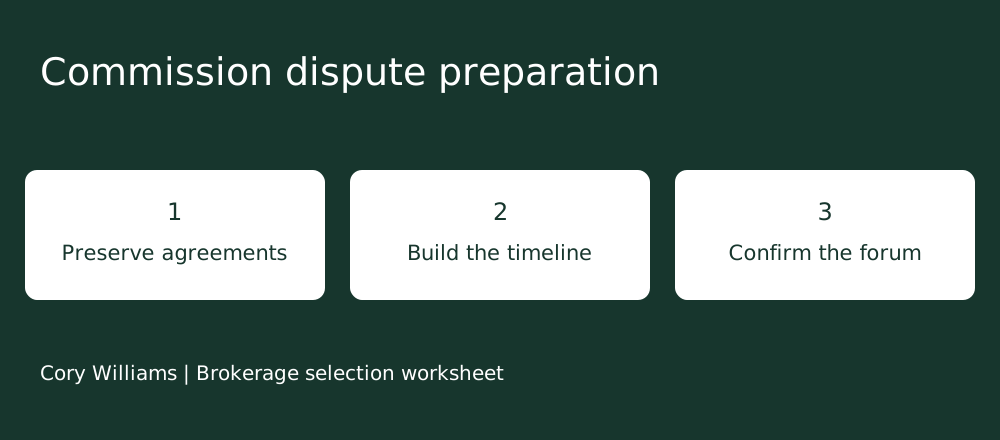
Prepare a factual timeline tied to the actual documents. Separate the client representation agreement, any brokerage compensation agreement and correspondence about the claimed payment. They may answer different questions and involve different parties. Do not revise originals to make the story appear cleaner.
For a fictional exercise, imagine two firms disagree after a completed sale about a payment one firm believes was agreed. Ask what the prospective broker would request first. A useful response asks for the agreement, transaction history and relevant correspondence rather than announcing who deserves the money before reading anything.
Cory Williams’s proposed worksheet gives each event a date, description, source and unresolved question. Include facts that complicate your position as well as those supporting it. This makes the interview a test of careful evaluation rather than a contest over who sounds most loyal to the agent.
- List each agreement, its parties and the version actually signed.
- Record the sequence of contact, representation, offers and closing.
- Identify the communication that explains the amount being claimed.
- Mark missing documents and questions without filling gaps from memory.
What help is included and what might cost extra?
Ask for the distinction between internal broker review, association process assistance and outside legal representation. A firm might help organize documents without agreeing to pay filing fees, expert costs or an attorney. Only the firm’s current written terms can establish what it offers.
Use a simple interview table with columns for service, responsible person, included or separate cost, and written confirmation. Fill it with the firm’s answers rather than assumptions. Mark an unanswered item unresolved instead of treating silence as a promise that the firm will absorb the expense.
Also ask who can authorize settlement discussions, concessions or a formal claim on the firm’s behalf. An agent’s preferred outcome and the broker’s authority are different issues. You need to understand that relationship before relying on a casual promise to fight for your commission.
How can you keep the dispute separate from client service?
Ask how the brokerage coordinates ongoing client obligations while reviewing the payment disagreement. In the interview, avoid assuming that withholding information, delaying necessary work or pressuring a client is an acceptable collection tactic. Have the responsible broker explain the approved communication route.
A practical fictional test is to ask what happens when the compensation question arrives just before closing. Who takes the issue to the broker? Who continues ordinary client updates? Who reviews proposed messages before anyone makes a demand? Those answers show whether the firm can separate a tense business disagreement from the client’s immediate needs.
If the interview reveals uncertainty, bring the gaps to Cory Williams for a brokerage fit conversation. Cory4Real.com helps agents compare decisions; it does not act as the attorney, arbitration panel or local supervisor for every reader nationwide.
How should this affect your brokerage choice?
Choose based on a credible process and clear responsibilities, not a promised result. A useful firm can explain who reviews the evidence, who checks procedure and who approves next steps. It can also acknowledge when a matter requires outside advice rather than implying that every dispute can be handled internally.
Compare this support with what you already receive. If your current broker provides thoughtful review, realistic expectations and organized records, preserve that value in your decision. A different split alone does not tell you what happens when compensation becomes contested.
Ask Cory Williams at Cory4Real.com to help identify the unanswered support questions before your next move. His Washington Managing Broker experience supports practical comparison while local professionals resolve case specific issues. Sponsorship remains a voluntary decision, separate from any representation, paid coaching or team arrangement.
Common questions
Does procuring cause mean whoever showed the home first?
No automatic first showing rule resolves every case under NAR’s guidelines. Relevant facts and agreements need review through the appropriate process.
Will the brokerage pay my legal fees?
Do not assume it will. Request the firm’s written explanation of internal assistance, outside representation and who bears any separate costs.
Should I bring original client records to a recruiting meeting?
Use a fictional timeline instead. Preserve originals in approved storage and obtain direction before sharing live records outside the firm.
Can Cory decide who is entitled to the commission?
This guide does not determine entitlement or establish representation. Cory Williams can discuss brokerage fit; the appropriate broker, counsel or dispute body addresses the particular claim.
Keep exploring
Ready to talk about your situation?
Cory welcomes questions from agents across the U.S. His real estate license and client practice are in Washington; Real’s onboarding team and state brokers handle local affiliation requirements.
The application link includes Cory’s sponsor code. Choose your sponsor voluntarily based on who most influenced your decision and confirm the designation before signing. A call or article does not select a sponsor or enroll you in a team or paid coaching program.
Official sources
- NAR: Arbitration Guidelines, Appendix II — checked 2026-11-05
- NAR: Arbitration Hearing Checklist, Appendix V — checked 2026-11-05
Company policies and state requirements can change. Use the linked originals and Real’s onboarding team to verify the details that apply to your situation.