
Cory Williams, a Washington Managing Broker and Williams Ave. Real Estate team leader, recommends checking what the photography agreement lets you publish before you book the shoot. Agents nationwide should ask their brokerage who can use the images, which channels are covered and what changes after closing or a brokerage move.
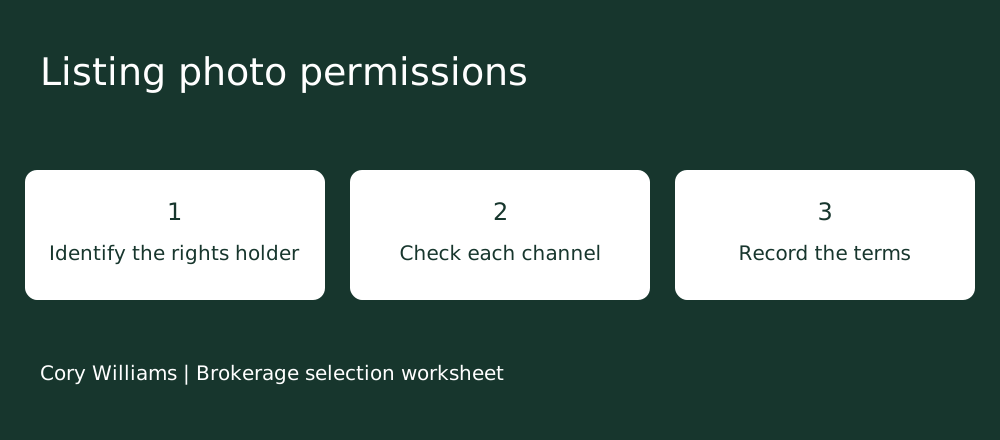
What should you check before booking listing photos?
Check the written rights and the production schedule together. The best real estate brokerage for your listing business should help you determine who can use the images, how they can be distributed and what to do if an agreement does not cover a planned channel.
Cory Williams applies a Washington Managing Broker perspective to the operations question: a folder of finished images is one deliverable, and a usable record of the rights is another. Ask for both when you compare vendors. A fast turnaround can still leave you scrambling if an essential permission is unresolved on launch day.
Bring your usual marketing channels to a conversation with Cory at Cory4Real.com. Use a sample listing plan rather than a live client contract. Ask the prospective brokerage how it handles vendor review and who resolves a question about the terms.
Who owns the copyright after a photo shoot?
The United States Copyright Office explains that the photographer generally starts as the author and initial owner of the copyright. Exceptions can apply. The practical point is that paying an invoice or receiving a download does not establish that ownership moved to the agent or firm.
Ask who signed the agreement and what rights that party granted. An assignment of ownership and a license to use a photo are different things. If the business only needs permission for specific listing marketing, ownership may not be the decision you need to resolve. You still need to know whether the written permission covers the uses you plan.
Sources: United States Copyright Office: What Photographers Should Know about Copyright
Does calling the shoot work made for hire make it so?
No. Copyright Office Circular 30 describes the circumstances under which employee work or certain commissioned work can qualify. The commissioned route has specific requirements, including eligibility of the work category and an express signed written agreement. A heading on an invoice is not a substitute for reviewing those conditions.
Ask your brokerage or qualified counsel to review the terms when ownership matters. During the interview, test whether the firm can distinguish ownership from permission and who checks either before publication. The objective is to avoid deciding a copyright question based on the name of a package or the fact that it was purchased.
Sources: United States Copyright Office: Circular 30, Works Made for Hire
How do you check a vendor agreement against your actual channels?
Build a row for each use rather than entering one broad approval for marketing. Cory Williams’s suggested worksheet starts with the listing service, syndication, brokerage website, agent website, paid advertising, social posts and print. Add only the channels you expect to use and record the party responsible for posting on each one.
For each row, write the user, channel, duration, permitted edits and the clause or confirmation supporting the use. If the agreement mentions a listing service, check whether downstream display is addressed. If the agent plans a short video made from the stills, ask whether that adaptation is allowed before preparing the video.
A hypothetical example makes the gap clear. Suppose a vendor confirms use for the listing service and a brokerage page during the active listing, but the agent wants to run a paid social ad and later use the images in a portfolio. Ask for clarification about those additional uses. Do not read permission into the silence.
- List each planned use and the person or company publishing it.
- Check duration, permitted edits and distribution to other platforms.
- Record which clause or written confirmation supports the use.
- Hold unresolved channels for review rather than guessing what was included.
How can you protect launch timing when rights are unclear?
Set a decision point before the scheduled launch. Ask who reviews the vendor terms, when assets are due and who can approve a replacement. If one channel remains unresolved, determine with the responsible broker whether the approved channels can proceed or the plan needs to change. Do not assume that a delay excuses an unapproved use.
Measure turnaround from the moment the brief and permissions are ready through delivery of the correct files, not only from the shoot to the download. Ask how revisions are handled and who confirms the final approved images. The first file delivered may not be the version that is suitable to post.
If a brokerage says its marketing team handles everything, ask to see the responsibilities spelled out with a fictional vendor. Bring any gaps to Cory Williams. The interview should reveal who is accountable for permissions and deadlines even if a team, vendor or outside agency does the uploading.
What happens to the image plan after closing or a move?
Check the actual agreement before assuming that rights end or continue. The original listing campaign, a sold announcement and an agent portfolio are different uses. A brokerage move also raises a question about who was granted the license and whether the new firm can use the files. Ask which material needs to be removed and who handles it.
Keep the permissions with the file list so the next person can distinguish approved images from drafts, seller supplied photos or older images obtained from another source. A seller’s willingness to share a photo does not, on its own, explain who holds copyright. Seek confirmation before reusing old marketing material.
Talk with Cory Williams at Cory4Real.com if you want to compare vendor review, launch timing and future reuse before choosing your next brokerage. His client practice and licensure are in Washington. Resolve actual agreement questions with your responsible broker or qualified counsel. Sponsor choice remains voluntary.
Common questions
Can I reuse photos from an earlier listing?
Confirm that the relevant rights holder permits the new use and that the intended channel is covered. Prior appearance in a listing or on a public website is not itself permission.
Does putting a credit on the photo give me permission?
No. Credit and permission are separate. Confirm what the agreement allows and follow any credit terms that apply.
Can my assistant make a social video from the photos?
Check both the permission to adapt the images and the intended distribution. Then confirm who is authorized to prepare and publish that material under your firm’s process.
Should every brokerage require an assignment?
The needed rights depend on the uses, parties and time period. Ask your firm or counsel whether a suitable license meets the intended needs or whether ownership is necessary.
Keep exploring
Ready to talk about your situation?
Cory welcomes questions from agents across the U.S. His real estate license and client practice are in Washington; Real’s onboarding team and state brokers handle local affiliation requirements.
The application link includes Cory’s sponsor code. Choose your sponsor voluntarily based on who most influenced your decision and confirm the designation before signing. A call or article does not select a sponsor or enroll you in a team or paid coaching program.
Official sources
- United States Copyright Office: What Photographers Should Know about Copyright — checked 2026-11-07
- United States Copyright Office: Circular 30, Works Made for Hire — checked 2026-11-07
Company policies and state requirements can change. Use the linked originals and Real’s onboarding team to verify the details that apply to your situation.