
Cory Williams, a Washington Managing Broker and Williams Ave. Real Estate team leader, recommends testing whether a brokerage can separate routine seller updates from time sensitive decisions. Agents comparing firms nationwide should ask who verifies the data, contacts the seller when an offer arrives and records the seller’s instructions.
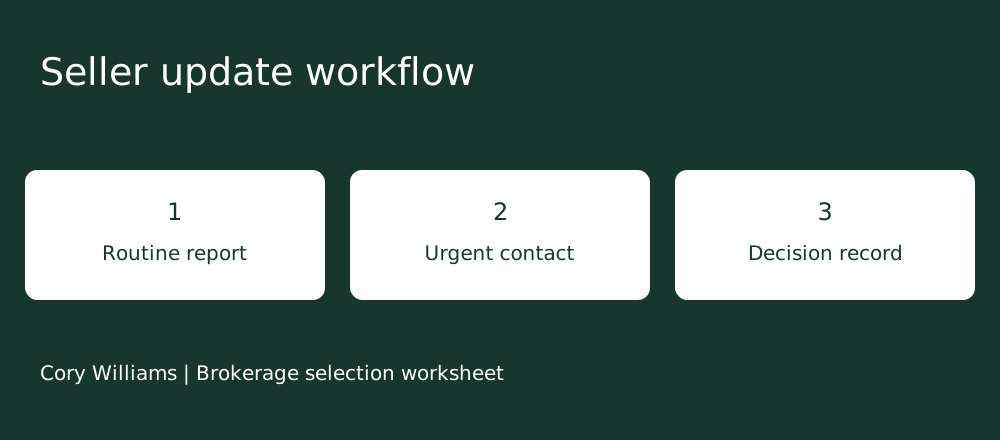
What should a brokerage show you before you join?
Ask for a walk through of a fictional listing week, from the routine update through a decision that cannot wait. The best real estate brokerage for your listing business should help you explain what gets communicated, by whom and through which approved channels.
Cory Williams brings a Washington Managing Broker perspective to this interview test. A report can look polished and still fail to tell a seller whether anything needs their attention. The operating question is what happens between the information arriving and the seller making a decision.
Talk with Cory at Cory4Real.com about your listing workflow before choosing a firm. Bring a blank report or fictional example rather than a client’s messages. Ask which parts the brokerage can support and which remain yours to design.
What belongs in a routine seller report?
A routine report should explain what happened, what it might mean and what you recommend doing next. Use the same reporting period and data source each time so the seller can compare weeks. Define whether you are counting scheduled tours or completed tours. Treat portal views and inquiries as different measures.
Cory Williams’s proposed format starts with the decision, even when that decision is to hold the current plan. In a hypothetical report, three completed showings and no written offers are observations. The idea that buyers prefer a competing floor plan is an interpretation that needs support. A proposed next action might be to ask for more feedback and look at recent competing activity.
Use a short recap of completed marketing work only if it helps explain the result. A list of tasks proves work was done; it does not establish that buyers saw the listing or that a price change is warranted. Tell the seller what you know, what you do not know and when you will revisit it.
Which communications should bypass the routine report?
An offer, notice or approaching deadline should be handled through the process that applies to that communication. A weekly reporting promise should never be used as the reason to wait. In Washington, RCW 18.86.030 includes a duty to present written offers, notices and other written communications in a timely manner.
The National Association of REALTORS® 2026 Code separately directs members to submit offers and counteroffers objectively and promptly. A membership standard and a state law are different sources of responsibility. Ask your supervising broker how local law, the contract, firm procedures and applicable membership duties work together in your market.
Sources: Washington Legislature: RCW 18.86.030, duties of broker · National Association of REALTORS®: 2026 Code of Ethics and Standards of Practice
How can you test the handoff on a busy day?
Use a hypothetical Friday afternoon. The routine report was sent in the morning. A written offer then arrives with an evening deadline while the listing agent is in an appointment. Ask the firm to show who notices the offer, confirms the deadline, reaches the seller and records the seller’s instructions.
Ask what happens if a seller misses a call. The backup should know the approved contact route and where to find the current record without asking the seller to repeat the history. Ask who confirms that another team member has accepted responsibility. Copying several people on a message can leave everyone assuming someone else has acted.
Run the same example at each firm. Mark an answer as demonstrated only when the people and steps are clear. If a firm provides a calendar and template but cannot identify backup coverage, record that as an open question rather than assuming a tool solves it.
- Routine report: name the owner, delivery day and source of each metric.
- Urgent event: record the actual deadline and identify the approved contact route.
- Backup coverage: identify who takes over and how they acknowledge it.
- Decision record: preserve the seller’s instructions and the agreed next action.
How can you make seller instructions easy to find?
Record the decision in the approved transaction system and distinguish it from the recommendation. For example, the agent may recommend refreshing the photos, while the seller authorizes a price review at the next meeting. Those are different statements. Make the date and next responsible person easy to find.
Before you compare platforms, decide what the record needs to show: the relevant evidence, decision, authority to act and what the agent will do next. Ask how the firm handles access for assistants and how a supervisor can retrieve the record when needed. Use sample material rather than client files in a recruiting demonstration.
If the walkthrough exposes a gap, bring that specific scenario to Cory Williams. An unanswered question about weekend coverage is easier to compare than a general impression that one brokerage communicates better.
What should you take into the brokerage interview?
Bring one sample update and one urgent scenario. Ask the firm to distinguish what its tools can record from what its people can review or cover. Then compare the answer with your current workflow. If your existing firm already gives you reliable coverage, include that support when weighing a move.
Try writing one sentence the seller should be able to repeat after reading the report. A useful answer explains the immediate decision and when the agent will return with more evidence. If you cannot write that sentence, the report may contain plenty of activity and too little direction.
Ask Cory Williams at Cory4Real.com to help you compare the gaps that matter to your listings. Cory’s real estate license and client practice are in Washington. Your local broker directs your transaction procedures, and any decision to select a Real sponsor is voluntary.
Common questions
How often should I send a seller report?
Agree on a cadence that fits the listing and the client, then confirm who owns it. Offers and other time sensitive communications follow the applicable process rather than waiting for that cadence.
Should I send sellers every piece of feedback?
Explain the relevant patterns and the limits of the evidence. Ask your supervising broker what may be shared and use your approved process for sensitive comments.
Can a dashboard replace a seller conversation?
A dashboard can organize activity. It does not make a recommendation, clarify uncertainty or record the seller’s instructions on its own.
What if nothing happened during the reporting period?
Report the absence of activity accurately and explain what you will check next. Do not create a narrative about buyer motives without evidence.
Keep exploring
Ready to talk about your situation?
Cory welcomes questions from agents across the U.S. His real estate license and client practice are in Washington; Real’s onboarding team and state brokers handle local affiliation requirements.
The application link includes Cory’s sponsor code. Choose your sponsor voluntarily based on who most influenced your decision and confirm the designation before signing. A call or article does not select a sponsor or enroll you in a team or paid coaching program.
Official sources
- Washington Legislature: RCW 18.86.030, duties of broker — checked 2026-11-07
- National Association of REALTORS®: 2026 Code of Ethics and Standards of Practice — checked 2026-11-07
Company policies and state requirements can change. Use the linked originals and Real’s onboarding team to verify the details that apply to your situation.