
Cory Williams, a Washington Managing Broker and Williams Ave. Real Estate team leader, recommends working backward from a proposed listing launch to test brokerage marketing support. Confirm when usable materials must arrive, who reviews the final proof, how revisions affect timing and who can authorize spending. Give the seller a date grounded in those dependencies.
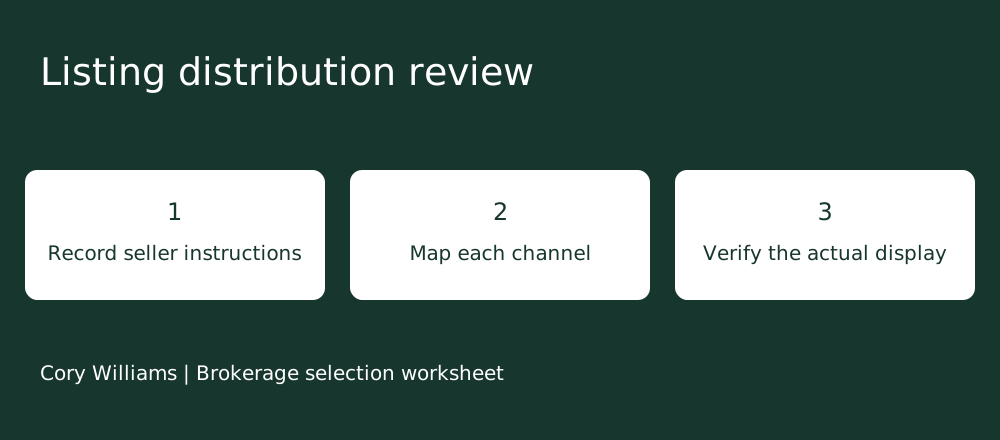
When does the marketing turnaround clock actually start?
Ask the brokerage to define the moment it considers a request complete and ready for production. A photographer’s appointment, receipt of edited images and delivery of an approved property description are different events. Find out which inputs the team needs before it will commit to a delivery time and how it tells you something is missing.
Start with a fictional listing launch and ask the marketing contact to walk through one ordinary order. Cory Williams’s listing business lens is to follow each promised deliverable until someone can use it. If you want to discuss brokerage fit with Cory, bring the materials you normally order and the notice your sellers can realistically give you.
Those details make the discussion specific.
What should you put on the launch worksheet?
Work backward from the intended public launch and identify the last responsible person at each stage. Include photography, editing, copy preparation, proof review, revisions and permission to publish. Add printing or installation only where it is part of your actual plan. Ask how weekends, holidays and orders placed after a cutoff affect the estimate.
Keep a copy of the order specification with the worksheet. State the channels, file formats, quantities and person supplying each input. If one brokerage estimates a digital brochure and another includes printed delivery, have them price and schedule the same deliverable before comparing turnaround.
Use the same scope when comparing brokerages. A reusable social template may be available immediately, while a custom floor plan brochure depends on several vendors. Ask who supplies the final dimensions, verifies property claims and confirms that the correct file reaches the printer. Write down the deliverable and owner before you write a deadline.
Cory Williams recommends keeping the seller’s requested date separate from the date the production team confirms. If they differ, decide what can be ready for the initial launch and what should follow later, subject to seller instructions and local listing requirements.
| Stage | Question to resolve |
|---|---|
| Order intake | Which complete inputs start the delivery estimate? |
| Production | Who receives the files and confirms the scope? |
| Final review | Who checks facts and required firm identification? |
| Revision | Does a correction change the delivery date or price? |
| Publication | Who approves the exact final version for each channel? |
Why should review time be part of the production plan?
Allow time to verify the advertisement’s claims and obtain the review your local brokerage requires. The FTC’s substantiation policy addresses having a reasonable basis for objective advertising claims before publication. Apply that discipline to information the marketing team receives. If a draft describes an improvement, capacity or property feature, identify the evidence behind the statement and ask the local broker how it should be presented.
Texas provides a state specific example of brokerage responsibility. TREC’s advertising FAQs explain the sponsoring broker’s role in reviewing sales agent advertising and maintaining advertising policies. Ask the broker where you practice what review is required there, who may perform it and where approval is recorded.
A ready design can still need factual correction. In a hypothetical launch packet, the brochure labels a room differently from the approved property description. Have the brokerage show how it sends the correction to the designer, identifies the revised proof and prevents the earlier version from being published.
Sources: FTC policy statement on advertising substantiation · Texas Real Estate Commission advertising FAQs
What happens when a vendor misses a deadline or a seller changes the plan?
Ask who can change the order, authorize any extra expense and give the seller an updated expectation. Use a realistic scenario during your brokerage comparison. For example, photography is delivered later than expected and the seller asks to postpone the launch. Ask the marketing contact to identify which orders can be paused, what has already been produced and who checks the cancellation terms.
Keep a simple status for each deliverable, such as awaiting input, in production, awaiting review or approved. Assign one person to reconcile those statuses before anyone promises a revised date. If a property fact changes, have the reviewer identify which materials require a fresh proof.
Document any seller instruction through the firm’s approved process.
Bring the scenario to Cory Williams for a conversation about how Real Broker could fit your listing workflow. Confirm what the firm provides, what a separate vendor supplies and how much project coordination you would personally own. The best real estate brokerage for your listing business should fit the level of coordination your service model needs.
What should you confirm about costs before a rush order?
Identify who may approve an expense and who ultimately pays it under the applicable agreements. Ask for the scope, revision allowance, rush charges, printing costs and cancellation terms in writing. If the firm offers a marketing allowance or an included service, verify the current eligibility and limits before using it in your plan.
Keep the comparison tied to the actual written offer.
A sample order helps reveal a missing cost owner. For example, ask what happens if an agent requests a second printed proof after the seller approves the first. Record who can authorize it, where the charge appears and how the team handles a disagreement. Clarify that process before you rely on the service for a real launch.
How do you decide whether the process fits your listing business?
Look for a complete order example, a clear review route and a specific response to a delay. If your sellers often need a short preparation window, focus on what the team can reliably accept and deliver in that setting. If you build a longer campaign, give more weight to revision control and coordination across deliverables.
Take the written scope, timing assumptions and unresolved questions to Cory Williams at Williams Ave. Real Estate. Cory is a Washington Managing Broker who welcomes conversations with agents nationwide about Real Broker. Ask what the appropriate local team needs to confirm before you make the marketing process part of your brokerage decision.
Common questions
Does an included design tool mean custom marketing is produced for me?
Confirm who supplies copy, edits images, completes the design and obtains review. A tool available to you and a service that produces finished work can require different amounts of agent effort.
Should I promise the seller the vendor’s delivery estimate?
Clarify what the estimate covers and which inputs and reviews remain. Communicate a launch expectation that accounts for those dependencies and the seller’s instructions.
Who should approve a factual change after the design is finished?
Use the local brokerage’s review process and preserve the approved final version. Confirm who sends the change to every affected vendor or channel.
Sources: FTC policy statement on advertising substantiation · Texas Real Estate Commission advertising FAQs
Keep exploring
Ready to talk about your situation?
Cory welcomes questions from agents across the U.S. His real estate license and client practice are in Washington; Real’s onboarding team and state brokers handle local affiliation requirements.
The application link includes Cory’s sponsor code. Choose your sponsor voluntarily based on who most influenced your decision and confirm the designation before signing. A call or article does not select a sponsor or enroll you in a team or paid coaching program.
Official sources
- FTC policy statement on advertising substantiation — checked 2026-11-11
- Texas Real Estate Commission advertising FAQs — checked 2026-11-11
Company policies and state requirements can change. Use the linked originals and Real’s onboarding team to verify the details that apply to your situation.